Clothes moths
The damage comes from the larvae, not the small moths you see. They eat wool, cashmere, silk and fur in dark, undisturbed places.
- Size
- Small moth, smaller larvae
- Colour
- Pale gold to buff
- Lives
- Wardrobes, drawers, under furniture
- Active
- Larvae all year; moths avoid light
How to tell
Avoids light
Clothes moths flutter away from light; pantry moths fly towards it.
Silky tubes
Larvae leave silk cases and webbing on fabric.
Holes in wool
Small, irregular holes in natural fibres, often hidden.
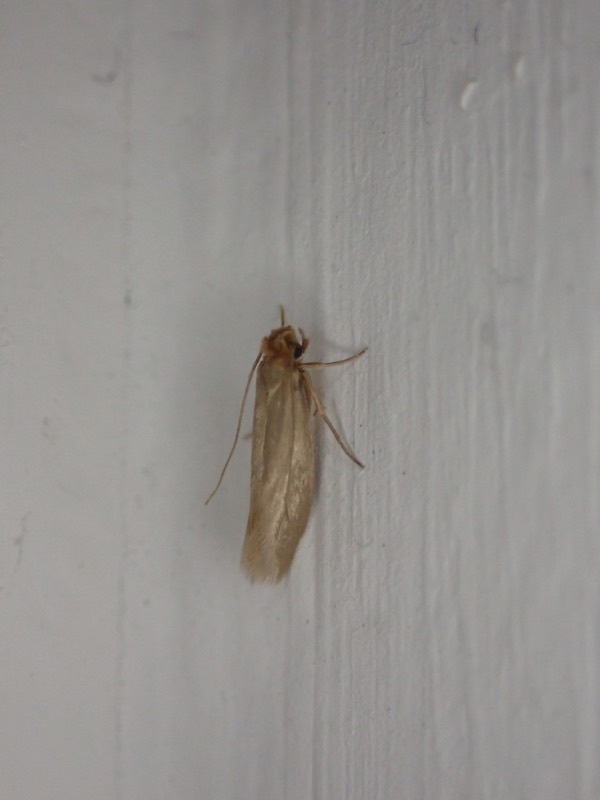
Signs you have them
- Holes in wool, cashmere and silk, often under collars and cuffs.
- Silky webbing or cases in folds and seams.
- Small moths in wardrobes that hide rather than fly to light.
- Bare patches in rugs under furniture.
The plan
- 1
Clean deep
Vacuum wardrobe corners, edges and under furniture.
- 2
Treat the clothes
Wash hot where the label allows, or freeze in sealed bags.
- 3
Store sealed
Clean natural fibres in sealed bags or boxes.
- 4
Monitor
Pheromone traps show if males are still flying.
Solutions for clothes moths
Moth pheromone traps
Shows if male moths are still flying.
Opens Google Maps. Call first to check they have it.
Garment storage bags
Sealed bags for wool and cashmere.
Opens Google Maps. Call first to check they have it.
Shoo does not sell these yet. They are standard products sold by other shops; follow the label on the one you buy.
What people worry about
Do the moths I see eat my clothes?
No, the larvae do the damage. They feed on wool, cashmere, silk and fur in dark, undisturbed places.
Do I need mothballs?
No. Deep vacuuming, washing hot or freezing affected items, and sealed storage work without the smell, which matters with asthma or small children.
Will cedar or lavender keep moths away?
They are not a reliable fix. Clean, sealed storage and regular checks do the work.
I put out pheromone traps. Why is there still damage?
Pheromone traps catch males only. They show if moths are still active; the cleaning and sealed storage are what stop them.
Are these the same moths as the ones in my kitchen?
No. Pantry moths live in dry food and need a different fix: check and clear food, then store it in sealed containers.